It Just Has To Be Delicious

Archive for the ‘Recipe’ Category

Chocolate Caramel Pie

When I saw the good quality chocolate and cream at the Herdsman, I was inspired to make choclate caramel pie again. I made the caramel using the Dulce de Leche method.

ccp 1

I used Gippsland cream (which is the closest thing to Clotted cream that I have seen in Australia, so thick and luscious) and Hachez 77% chocolate. It is important that the chocolate is a high percentage cocoa because it needs to contrast with the sweet caramel.

Pastry:
1 1/4 cups or 190g of plain flour
1/4 cup or 40g self raising flour
1/4 cup or 50g caster sugar (I use brown sugar and pass it through a sieve)
90g unsalted butter
1 egg
Pinch salt

Method:
1. Sieve the flours and sugar into a food mixer.
ccp 4

2. Cut the butter into small cubes and add it to the flour/sugar. Start the food mixer and mix until the mixture resembles fine breadcrumbs (you can rub the butter in using your fingers if you like, but I have warm hands, so I use a food mixer).

3. Pour the mixture into a bowl and add the egg and a pinch of salt. (My photo shows a double quantity which is why there are two eggs). Mix with a spatula or wooden spoon until it comes together, then using your hands, lightly knead and shape it into a round (keep handling to a minimum, and if you have warm hands like me, rinse them in cool water first so that you start off with cool hands).

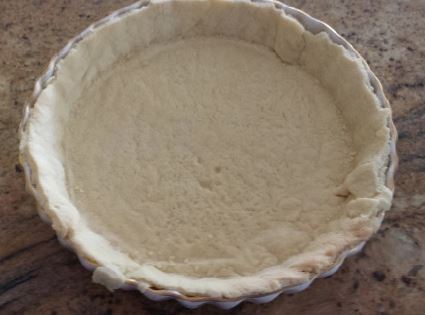
4. Roll the pastry out into a round and use it to line a flan tin or dish. Put the pastry lined flan dish in the fridge for approx 30 mins if you have time – this will stop it from shrinking away from the edge in the oven.
5. Cut a circle of baking parchment slightly bigger than the middle of the flan dish, and put some ceramic baking beans in the middle. Bake for 10 minutes at 190 deg C, then remove the baking beans and bake for a further 10 minutes. (The baking beans just stop the middle of the tart case from rising too much, you can get away without using them, but you will need to prick the base with a fork, and you may find it will rise a little).
6. Remove the dish from the oven and leave the pastry to cool to room temperature.

The caramel (dulce de leche method):
1 tin of condensed milk (must be condensed – not evaporated) Check that the tin is in good condition, do not use if dented – the lid must be unopened and not damaged.

1. Using an old saucepan, place the unopened tin of condensed milk in the saucepan, cover with water.
2. Bring to the boil and simmer gently for 3 hours. You can cover it with a lid to stop the water from evaporating too much. Check it every hour to make sure that the water is not boiling dry – top the water up as necessary.
3. Carefully remove the tin from the water and leave it to cool thoroughly – it can be stored in the fridge until needed. Do not attempt to open it while it is still warm – I have heard stories of some tins exploding when opened, but I have never had a problem – be sensible just in case – cover it with a cloth when opening.

ccp 9

Regular Caramel:
Use this method if you don’t have condensed milk
300g golden caster sugar
175g butter
200ml double cream

1. Place the sugar in a pan with2 tablespoons water. Heat until it dissolves but do not stir.
2. Boil until amber.
3. Stir in the cream – add a pinch of salt if you like salted caramel.
4. Stir in the butter and simmer for a further 3 minutes.

Chocolate Mousse:
200g good quality dark chocolate, coarsely chopped
2 tablespoons icing sugar

1 1/2 cup (375ml) of whipping cream, whipped with the icing sugar
1. Place the chocolate in a bowl and melt by placing the bowl over a saucepan of gently simmering water (the base of the bowl must not dip into the water) – or use a microwave if you are confident that you can melt it perfectly. Personally I use the saucepan double boiler method – I am not a fan of microwaves.
ccp 10

2. Cool the mixture for 5 minutes.
3. Fold in half of the whipped cream/icing sugar mixture – it will look claggy at first but keep folding with a spatula, then add the rest and fold again.

To assemble:
When the pastry case is cooled, you can add the caramel to the base of the pastry case. If you like salted caramel you can add a few scant flakes of sea salt on top of the caramel (if you have not already salted it).
ccp 12

Put the caramel coated pastry case in the fridge so that it is completely cool before adding the mousse. This will help to keep the layers nice and separate.
ccp 13

Top the cool caramel with the mousse mixture and leave to set in the fridge. 3-4 hours should do it.

ccp 1

This recipe was inspired by Soda’s beautiful chocolate caramel pie at the North Beach cafe. Sadly Soda is no longer in business:

ccp

Linguine with meatballs

ling 1

When I visited The Herdsman I chose some ingredients that would make it easy to prepare a quick midweek meal. With the array of fresh pastas and sauces, it was hard to choose, but in the end I settled for linguine, meatballs and a puttanesca sauce. The meatballs were quite large and took approx 8 minutes to cook. Meanwhile, I boiled the kettle ready for the pasta.

ling 2

Once the meatballs were nicely browned on the outside, I added the sauce along with some chopped mushrooms and onion. You don’t have to, but you can add anything you like to pimp up the sauce, like chilli, garlic, bacon, peppadew peppers, fresh tomatoes etc.

ling 3

The pasta took approx 4-5 minutes in boiling salted water, and I served the dish with the rest of the Herdsman’s garden salad and a sprinkle of parmesan. The whole dish took less than 20 minutes. Ideal for midweek and delicious too.

Prawn Ravioli with crabmeat and prawn oil

When I came home from the Herdsman with my basket of goodies, I set to work cooking, newly inspired by what I had seen and sensed in the shop. My first recipe was a home made prawn ravioli on a butternut squash puree, with crab meat and prawn flavoured oil.
This is based on a Gary Mehigan recipe but has my own personal twist.

PRAWN RAVIOLI ON BUTTERNUT SQUASH PUREE WITH CRAB MEAT AND PRAWN OIL
pr 1

The amount that I made was enough to feed 3 people comfortably or 2 greedy people ! I bought a ready cooked swimmer crab from the Herdsman and used a crab pick to remove the meat, but you can cook a raw crab if you prefer. Once the crabmeat is prepared, you need to get the ravioli filling ready, and the oil infused with flavour.

pr 2
pr 3

For the oil you need :
6 large tiger prawns (approx 200g)
200ml of good olive oil
2 bay leaves
1 star anise
1 teaspoon of tomato paste/puree
1 small fennel bulb
pr 4

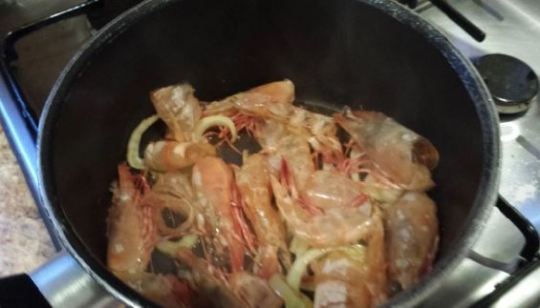
I had 6 huge prawns, which I de-shelled and removed the black food canal from (you do this by gently running a knife along the back of each prawn and easing the black tube out with the knife tip). I then sliced a fennel bulb thinly (you need about 30g but the exact quantity doesn’t matter too much). I placed the prawn shells in a pan with approx 2 tablespoons of olive oil, the sliced fennel, 2 bay leaves, and a star anise. When the fennel is soft, add more oil (up to 200ml) and a teaspoon of tomato paste/puree. Put the lid on and continue to heat gently for 20-30 minutes to infuse the flavours into the oil. Keep the prawn
meat for the ravioli filling. When the oil is done, pass it through a sieve to remove the shells and spices, discard the shells.

pr 5
pr 6

For the filling you need:
Prawn meat as above (approx 200g)
1 egg white
a pinch of cayenne pepper or smoked paprika
the zest of half a lemon
1/8 – 1/4 teaspoon of salt
100ml thick cream

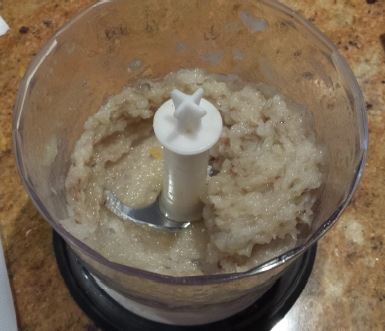
Whizz up all of the ingredients in a food processor, adding the cream last as you may not need all of it. Try 50mls of cream first and check the texture – it should be soft but not runny. We want the filling to hold together inside the ravioli.

pr 7

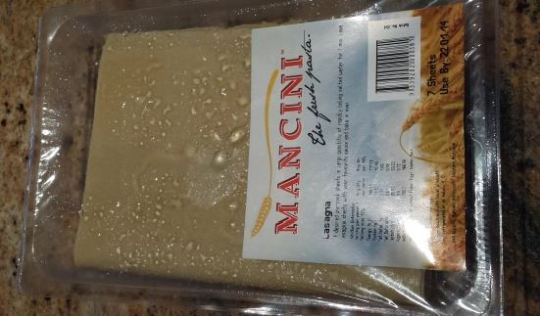
To make the ravioli, you can either make fresh pasta or buy lasagne sheets. I bought lasagne sheets both for convenience and because I wanted to test the quality of the Herdsman’s produce. You can make your own pasta dough by mixing 200g of ’00’ flour with 2 beaten eggs, a tablespoon of olive oil and a pinch of sea salt in a food processor. This dough should be left to rest for a while at room temperature before passing it through a pasta machine.

pr 8

To make the ravioli, cut a rectangular piece of dough approx 6cm x 12cm. Place a small spoonful of filling in the centre. Brush some milk around the edges and fold it over, making sure that you push out all of the air while you are sealing up the pasta. If the edges look uneven you can trim them with a knife or a wavy pasta cutter. The ravioli take approx 5 minutes to cook in boiling salted water.

pr 9

 pr 10

For the butternut squash puree you need:

300g of grated butternut squash
60g butter or dairy free spread
80ml milk

Melt the butter in a large saucepan and add the butternut squash. When it starts to soften, add the milk, cover and cook for 6-8 minutes. Season with salt and pepper, then use a stick blender to puree it. You can also sieve the mixture if you want it to be really smooth. This can be made in advance and reheated while the pasta is cooking.

pr 13

To assemble the dish, place some butternut squash puree on the plate, the ravioli on top, and some fresh crab meat on top of the ravioli. Drizzle some of the flavoured oil around the dish.
I served this with one of the Herdsman’s pre-prepared garden salads and the olive and onion bread.

Raspberry and Peach Scones

sc 1

sc 2

Recently I have made some very successful blueberry scones and I had the idea to try a kind of melba scone using raspberries and peach icing. The Herdsman had some lovely raspberries on display, so I made sure that they went in my basket. The recipe is very similar to the blueberry scone recipe.

Recipe:
2 cups (approx 250g) self raising flour – however, if you only have plain flour, you can add 2 teaspoons baking powder
half a teaspoon of salt
2 tablespoons sugar
1 teaspoon baking powder (even though it is self raising flour, I added a little extra boost)
5 tablespoons (70g) butter or non-dairy spread
1 cup of raspberries (this is approx one small 150g punnet)
1 cup (250ml) of double cream or some cocnut cream/yoghurt
For the glaze – approx 1 cup (140g) of icing sugar and half a fresh peach

Method
1. Heat the oven to 200 deg C and line a baking tray with some baking parchment.
2. Mix the dry ingredients in a bowl or food processor i.e. the flour, baking powder, salt and sugar.
3. Either rub in the butter or use the food processor to blend it in until it is like fine breadcrumbs.
4. Stir in the raspberries.
5. Add the cream (if using coconut cream or yoghurt, add less than the recipe states and gradually add more as needed) and very gently fold it in without crushing the blueberries, then pat the mixture together to form a soft dough. Treat it very gently, it does not have to be perfectly smooth.
6. Roll the dough out into a long rectangle approx 12 inches by 3 inches. It will be quite a thick layer of dough (1-2 inches thick) Cut this in half, then cut each piece in half again so that you have four pieces approx 3 inches square. Cut each piece diagonally so that you have 8 scones.
7. Brush each scone with some cream (or milk or coconut cream) and place on baking tray. Bake for approx 25 minutes.
8. To make the glaze, sift the icing sugar into a bowl. Peel the peach and puree it using a stick blender. Add the puree to the icing mixture a little at a time until you get a soft glaze which isn’t too runny.
9. Spread the glaze over the top of each scone.

Did my idea work ? Well it was 50% successful. The raspberries were delicious in the scones although they are not quite as robust as blueberries, so they spread and bleed into the mixture a lot more. The peach icing tasted very sweet and not particularly peachy. If I were doing this again I would maybe include some peach chunks in the scone mixture and use a lemon glaze as before, or maybe no glaze. The scones did taste lovely, it’s just the glaze that needed some refinement. Again I was very impressed with the quality of the Herdsman’s ingredients.

Blueberry and Lemon Scones

I made these scones this morning when my friend Sarah came to visit. They taste incredibly good. If you treat the dough really gently, the blueberries keep their shape and they burst in your mouth as you eat the scone. you can also make them with raspberries and strawberries and you can add chunks of white chocolate if you want to be a bit decadent, but I found them sweet enough with just the lemon glaze.

bls 1
bls 2

Ingredients:
2 cups (approx 250g) self raising flour – (if you only have plain flour, you can use plain and add 2 teaspoons baking powder)
half a teaspoon of salt
2 tablespoons sugar
1 teaspoon baking powder (even though it is self raising flour, I added a little extra boost)
5 tablespoons (70g) butter or non-dairy spread
1 cup of blueberries (this is approx one small 150g punnet) washed and patted dry with kitchen roll
1 cup (250ml) of double cream (or approx 100ml of premium coconut cream if you are dairy free/vegan, this also works with coconut yoghurt)
For the glaze – approx 1 cup (140g) of icing sugar and half a fresh lemon

Method:
1. Heat the oven to 200 deg C and line a baking tray with some baking parchment.
2. Mix the dry ingredients in a bowl or food processor i.e. the flour, baking powder, salt and sugar.
3. Either rub in the butter/dairy free spread, or use the food processor to blend it in until it is like fine breadcrumbs.
4. Stir in the blueberries.
5. Add the cream and very gently fold it in without crushing the blueberries, then pat the mixture together to form a soft dough. Treat it very gently, it does not have to be perfectly smooth. (If using coconut cream, just add 50ml to start and then add more as you need it – you shouldn’t need more than 150ml in total but it depends on the consistency of the coconut cream. I also added a teaspoon of lemon juice when I used coconut cream, because regular milk has an acid in it and I think you need a little acid to help with rising. A little
cream of tartar would also work)
6. Roll the dough out into a long rectangle approx 12 inches by 3 inches. It will be quite a thick layer of dough (1-2 inches thick) Cut this in half, then cut each piece in half again so that you have four pieces approx 3 inches square. Cut each piece diagonally so that you have 8 scones.
7. Brush each scone with some cream (or milk) and place on baking tray. Bake for approx 25 minutes. If brushing with coconut cream, bear in mind that they will not brown like milk basted scones, so touch them gently to test if they are done. If they are a little blonde, it doesn’t matter, because the top will have icing on it.
8. To make the glaze, sift the icing sugar into a bowl. Wash the lemon, then grate the zest from the lemon – add this to the icing sugar. Halve the lemon and squeeze the juice. Add the juice to the icing mixture a little at a time until you get a soft glaze which isn’t too runny. You want it to flow, but not run off the scones.
9. Spread the glaze over the top of each scone. You can use a piping bag if you like, or just use the back of a spoon like I did.
10. Enjoy with tea, coffee and friends.

Smoothie Bowls

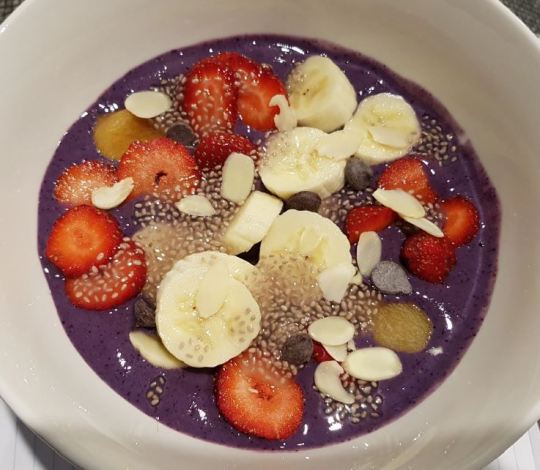
Smoothie bowls are a great breakfast idea and they can be made up in advance. The possibilities are endless, but one of my favourite breakfast smoothies is a combination of frozen blueberries, frozen cherries, almond milk, soy milk and protein powder. I bulked this up a bit by adding some cooked quinoa and then topped it with sliced banana, chia, strawberries, dried apricots, almonds and a few chocolate nibs.

sm bo

To get the best smoothie bowls, you need to be a little bit organised at the start of the week. If using quinoa, wash and cook up a small amount and keep it in the fridge in a sealed container. Put some chia seeds in a jar and soak them – they should swell with the water and form a gel like slurry. The smoothie can be made up in advance but will probably need a stir in the morning, then all you need to do is add your toppings.

Frozen berries make a great smoothie base because you don’t have to add ice. You can use blueberries, strawberries, raspberries, cherries and some of the mixed berries too. Fresh berries are also good but don’t add the coldness to the smoothie.

You can use whatever milk you like and add yoghurt – thick greek yoghurt has a great protein content – and if you prefer not to add dairy you can use coconut yoghurt. For a bulkier smoothie you can add protein powder, quinoa, oats, psyllium husk and shredded coconut, and you can also soak cashews in water and whizz them up in the blender for a lovely cashew cream. I like to mix my milks so that I get a good fat/carb/protein mix.

Toppings can be fresh or tinned fruits – peaches, pears, apples, banana, strawberries, kiwi, lychees, pineapple.

You can also add nuts – if they are slightly toasted, that’s even better, and you can crush them too. You can also sprinkle desiccated coconut over the top.
Dried fruits make a great topping – sultanas, apricots, dates, figs.

Soaked chia is a nice addition, also agave syrup, maple syrup, honey and even a slight drizzle of nutella. Yum. Every bowl can be different, and they are fun to make.

Tiramisu

What do you think of when you think of Tiramisu? Is it creamy, is it chocolatey, is it custardy? I imagine that every Italian home and restaurant has their own special recipe, but the one that I really enjoy that reminds me of Italy is the recipe that I devised after tasting the house speciality tiramisu at Alla Rampa Restaurant in Rome.

tir 1

Alla Rampa is just under the Spanish Steps, and I was so impressed with the dessert that I went back for seconds the next night. Their version is dished up from a large flat baking tray, and is coffee and sponge covered in the most delightfully light custard with marscapone and sprinkled with powdered chocolate. No creamy layers or chocolate layers in sight. I once made this for Nancy Lam and she cleaned up the dish by scooping out the remnants with her fingers and licking them, such an amazing compliment from a great lady.

If you are ever in Rome, please make sure that you pay a visit to Alla Rampa to try this amazing dessert. If you are not likely to go to Rome in the near future, follow the recipe below and let me know what you think – I hope you love it. The quantities are approximate because I made the recipe up, please feel free to adjust them to suit your taste.

Recipe
1 pack of Boudoir or Savoiardi biscuits (these are sponge fingers which soak up the coffee and liqueur)
tir 2
1 coffee based liqueur miniature such as Tia Maria or Kahlua (approx 100mls)
1 cup of strong black coffee (e.g. use 3 heaped teaspoons of instant coffee, or if you prefer,
make ‘proper’ coffee) cooled
4 eggs – separated – whisk 2 of the whites into stiff peaks, save the other 2 whites for when
you want to make a meringue
100g caster sugar
4 level tablespoons plain flour
4 level tablespoons cornflour
600mls milk
2 teaspoons vanilla extract
250g – 300g marscapone
chocolate powder for sprinkling

Method
1. Take a large shallow dish and arrange the savoiardi biscuits in the dish so that the base is completely covered. If you have an oval dish like me, you will need to line the biscuits up like soldiers and then break some to fill the gaps around the edge.

tir 3

2. Pour the liqueur over the biscuits trying to ensure that each biscuit gets a splash of liqueur. Now pour the coffee over the biscuits – use half the coffee first and see how it goes. The biscuits are very absorbent, so you are likely to need all of the coffee.

tir 4

3. Whisk together 4 egg yolks and the sugar until thick and pale. Beat in the flour and cornflour along with a large splash of the milk.
4. Heat the rest of the milk in a medium-large saucepan until almost boiling, and pour it onto the egg mixture, stirring constantly.
5. Now tip the whole mixture back into the saucepan (use a spatula to scrape every drop out of the bowl), and heat again on a low heat, stirring all the time (otherwise it will stick). When it has boiled and thickened, remove it from the heat.
6. Fold in the whisked egg whites and return to the heat for a few minutes, you can also add the vanilla extract at this point.
7. Remove from the heat, cool for a few minutes and stir in the marscapone. The marscapone should melt quite nicely into the mixture, keep stirring until it is smooth and lovely (taste a nice big spoonful just to be sure). You can add extra marscapone if you like a creamier texture, it’s up to you.

tir 5

8. When it has cooled down sufficiently, it can be lukewarm, but not hot, pour it over the soaked biscuits so that all of the biscuits are covered.

tir 6

9. Using a sieve, sprinkle chocolate powder over the top so that it is completely covered. Chill for at least an hour, and serve only to your most deserving friends.

tir 7

Homemade baked beans

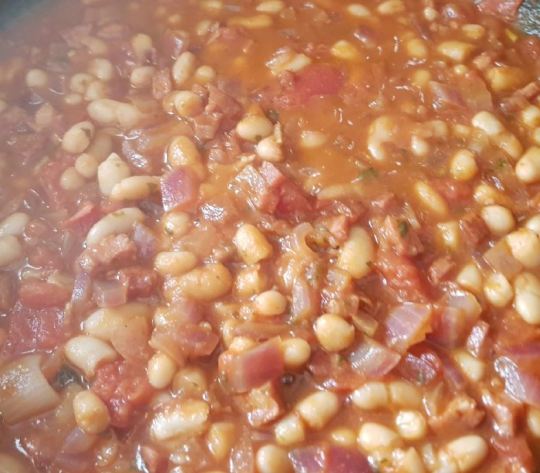
Canned baked beans….meh. They’re great for a quick and convenient snack, but beware – the average can of beans has 21g of sugar. It is simple to make your own, you then know exactly what goes into them, and you can also mix up your beans if you like. You don’t have to use haricot, you can use cannelini, pinto, navy, any type you like or a mixture.

Beans

My recipe uses chorizo, you can also use bacon if you don’t like the strong flavour of chorizo, or if you are vegetarian, you can leave out the meat (or include vegan sausages) and up the flavour stakes with additional herbs and spices. This recipe makes enough for 4 serves for dinner or approx 6 batches of smaller lunch-time serves. Quite an easily portable snack too. You can also serve more people at dinner by adding other ingredients to the plate such as toast, cheese, eggs, sausages, chips, hash browns and sauteed mushrooms.

Ingredients:
2 x 400g cans of beans of your choice (you can also use dried beans if you soak them overnight)
1 x 400g can of diced tomatoes (or about 6 large Roma or Truss tomatoes skinned and chopped)
1 average sized onion, diced
1 clove of garlic, very thinly sliced or chopped
Optional extra veg: a small chopped carrot, a small chopped capsicum
1 chorizo chopped into small dice, or two to three rashers of smoked bacon diced or vegan sausages chopped
1 teaspoon of Worcester sauce (If vegan, use a spoon of liquid smoke instead)
1 teaspoon of dijon mustard
1 teaspoon of smoked paprika
Half a teaspoon of cumin powder
1 teaspoon of mixed herbs, dried, fresh or freeze dried
1 teaspoon of vegetable stock powder
salt/pepper/sugar to taste

Method:
Prepare the chopped ingredients:

beans 2

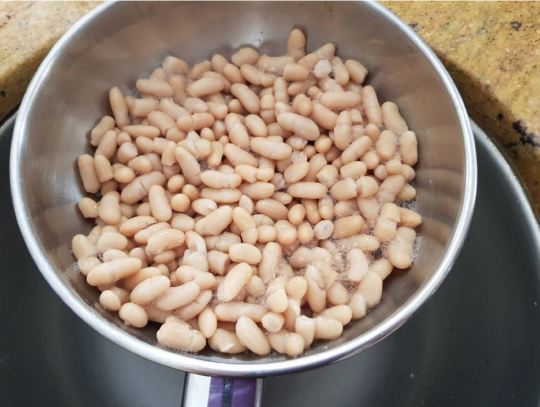
If using canned beans drain them:

beans 3

Fry the chorizo, or vegan sausages, (or bacon) in a few tablespoons of olive oil until it is slightly crispy and the fat has rendered.

beans 4

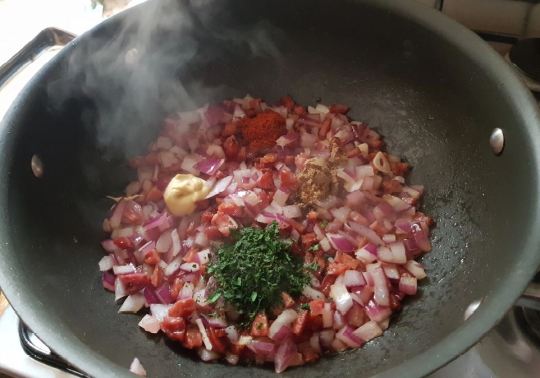
Add the onions and garlic (and the carrot and capsicum if including them):

beans 5

Once the onion begins to soften add the flavourings – mustard, cumin, paprika, herbs, Worcester sauce, stock powder.

beans 6

Stir everything to combine well and then add the tomatoes.

beans 7

Half fill the tomato can with water, swirl it to rinse the last bits of tomato and add it to the pan. Alternatively just add a little extra water if using fresh tomatoes.

beans 8

Add the beans, but try not to stir them too much (this tends to mush them up. Shake them around the pan.

beans 9

Leave to cook for 20 – 30 minutes until the beans are soft enough to eat. Add salt and pepper to taste. You shouldn’t need to add sugar, but if you do, consider adding some honey or agave syrup instead of granulated sugar.
Serve in a bowl with fresh crusty bread and some grated cheese. So simple and tasty that you’ll probably never buy cans of baked beans again.

Vegan version with vegan sausages and carrot:

beans v

My favourite cheesecake

chck 2

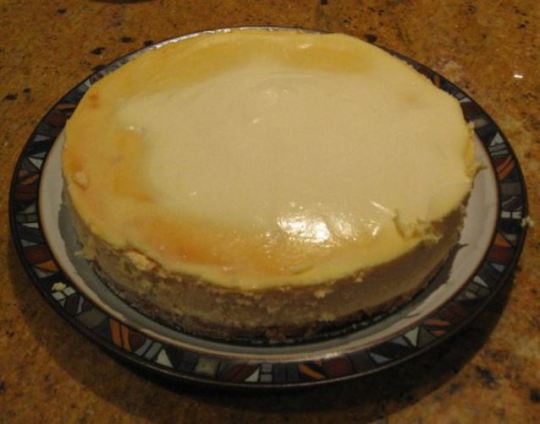
For me, the best cheesecakes are baked. I think the texture is much better than the whipped and refrigerated versions.

This is my favourite cheesecake recipe – every time I make it, it turns out well. It is based on Nigella Lawson’s London cheesecake recipe, but with a few minor variations, which I will explain as I go along. It is baked in the oven in a ‘bain marie’ which is effectively a water bath. You make the bain marie by filling a roasting tin with hot water and placing the tin of mixture into it. It is really important to line the tin with strong foil to avoid water seeping into the mixture. Make sure that you buy the extra long heavy duty foil – I use 3 layers to protect the tin and scrunch it all up around the top of the tin. Don’t buy the shorter length foil because you will have to overlap it, and the water will find a way of getting through. I also use a springform tin – you don’t have to, but if you want to present your cheesecake on a nice plate, you will need to turn it out and a springform tin is the best option. Make sure that the base of your tin is firmly in place before you fill the tin with mixture. If you push the bottom of the tin from underneath, it should not dislodge – if it does move then your base is not properly seated – push it hard until it ‘pops’ into place. Failure to do this will mean that you lose some of your mixture through seepage.

chck
Recipe
150g plain digestive biscuits (as my friend Sue said, “use the proper ‘pommie’ ones” e.g. McVities)
75g unsalted butter melted or very very soft
500g cream cheese (Nigella says to use 600g, but in Australia it comes in 250g tubs, so I use 500g with an 18cm tin instead of 600g with a 20cm tin. I also use one tub of ‘value’ cream cheese which is harder, and one tub of better quality or light cream cheese which is softer – if you use two tubs of good quality the texture will be too soft.)
100g caster sugar (Nigella uses 150g, but I think this is sweet enough)
3 large eggs
3 large egg yolks
1 1/2 tablespoons of vanilla extract
2 tablespoons of lemon juice (Nigella uses slightly less)
18cm Springform tin
Heavy duty long tin foil
For the topping
200ml tub sour cream (Nigella uses less, but I like a nice layer on top)
1 tablespoon caster sugar
Half a teaspoon of vanilla extract

1. Process the biscuits until they are like crumbs in a food processor (or put them in a bag
and bash them with a rolling pin). Mix in the butter and use them to line the bottom of the springform tin, pressing them down so they are smooth and level. If you want to make it easier to remove the cheesecake from the base of the tin, you can line it with a layer of baking parchment before adding the biscuits, but this step is not compulsory. Put the tin in the fridge to cool and set the biscuit layer. Heat the oven to 180 deg C.
2. Beat the cream cheese until it is soft (you may prefer to use a food mixer for this, but you can also use a wooden spoon and some elbow grease). When it is smooth add the sugar. Beat in the eggs and egg yolks, then the vanilla and lemon juice. Boil the kettle.
3. Line the outside of the chilled tin with strong foil so that it covers the bottom and sides in one large piece. Repeat with another layer (I actually use 3 layers for extra safety, but you don’t have to). This will protect the filling of the tin as it cooks in the water bath.
4. Pour the cream cheese filling onto the biscuit base and place the springform tin inside a roasting tin. Fill the roasting tin with hot water from the kettle until it comes halfway up the sides of the springform tin. Carefully place the whole thing in the oven and cook for 50 minutes.
5. Just before the 50 minutes is up, whisk the topping ingredients together in a bowl – sour cream, sugar and vanilla.
6. Check the the cheesecake is almost set – it should be set enough to hold the sour cream
layer, but not rigidly so. Pour the sour cream topping over the cheesecake and cook for a
further 10 minutes.
7. Carefully remove the tray from the oven and take the springform tin out to cool. When it has cooled to room temperature place it in the fridge to chill it before unmoulding. It
should shrink away from the sides of the tin slightly – if not, run a sharp knife around the
edge before releasing the spring.

chck 3

So that’s it – my favourite cheesecake. My friend Kara would like to try a choc mint
cheesecake, so one day I am planning to try this recipe but with an Oreo base, mint
flavoured filling (maybe with chocolate chips in it), and either a chocolate drizzle topping or chocolate shavings on top – or maybe even both.

Update – this is the choc mint version just before cooking:

chck 4

Crustless Mini Quiches

cmq

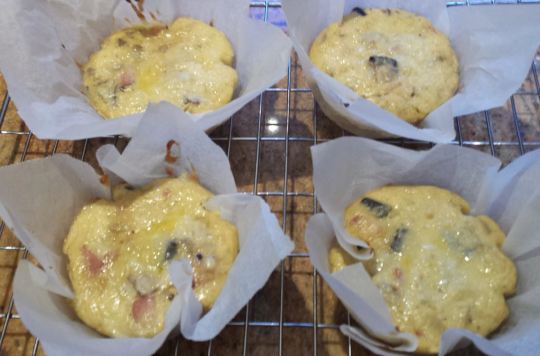
These mini quiches are lower in carbohydrate content and dairy casein than regular quiches. They use ricotta which has hardly any casein protein in it and little mature cheddar for some extra cheesy flavour. I baked mine in a larger size muffin tray, but you can make them mini muffin size or regular muffin size and reduce the cooking time slightly. Cooking times vary from oven to oven, but you know they are perfect when they are just very slightly wobbly in the centre.
They are ideal for a quick brekkie, and if you don’t have muffin cases, you can use squares of baking parchment and scrunch them into the muffin tray indents.
Other than the cheese, you can put whatever you like in them. I dry fried some bacon, mushrooms and onion and added it before baking them, but you can use anything. Here are some suggestions:

broccoli
peas
sun dried tomatoes
cauliflower florets
spinach
prosciutto
small pieces of sausage
capsicum
pieces of butternut pumpkin

Just make sure that all of the extra filling ingredients are cooked or partcooked beforehand so that you don’t get any raw veg or meats in your quiche!

Ingredients (makes 4 large muffins):
Mixed pre-cooked filling – see above
3 eggs
salt
pepper
1 teaspoon mixed herbs (dried) e.g. basil, sage, oregano, thyme, mint, coriander
I used a standard dried herb mix, but you can also use fresh or choose the herbs separately
50-70g ricotta cheese (depending on how much you like it and how much filling you have)
approx. a third of a cup of finely grated cheddar

1. Mix together the eggs, salt, pepper, herbs and ricotta – give it a good whisk with and electric whisk to make it as light as possible. The mixture might look a bit strange, but it will turn out fine.
2. Stir in the pre-cooked filling and most of the cheese – save a little cheese for on top.
3. Place mixture in muffin cases and sprinkle extra cheese on top.
4. Bake at 190 deg C for approx. 20 – 25 minutes.