It Just Has To Be Delicious

Archive for June, 2020

Kung Po

This is a nice recipe for mid-week dinner. You can pretty much make it up as you go along – it’s probably not the definitive authentic kung po recipe, but it works for me and is very tasty.

Kung Po Chicken:
kp 1

Kung Po Tofu:
kp 2

Serve it with rice. You can vary the veggies that you add to it depending on what you have in the cupboard, but traditional favourites are carrot, onion, baby sweetcorn, capsicum and tomatoes. You can also add peanuts and extra chilli if you like it hotter.
It contains dried chillies, which are quite hot, if you don’t want it to be quite so spicy, leave the dried chilli seeds out.
You can also use fresh chilli instead of dried – use whatever you prefer or have available – even a teaspoon of chilli paste would work.
This recipe is for chicken, but you can use tofu, prawns, or pork instead.

Recipe – serves 2 :
300g chicken sliced into thin bite sized strips (or other meat or firm pieces of tofu)
1 tablespoon cornflour
1/2 teaspoon crushed szechuan peppercorns
2 tablespoons hoisin sauce
1 tablespoon dark soy
1 tablespoon rice wine vinegar
1 or 2 chopped dried red chillies with or without seeds
Mixed veg, sliced thinly for stir frying e.g.:
Carrot, baby sweetcorn, red onion, capsicum, tomatoes, mushroom, broccoli, beansprouts, snow peas.
Peanuts (optional)

1. Mix the cornflour with the crushed peppercorns, and coat the chicken with the flour mixture.
2. Mix together the sauce ingredients in a jug – hoisin, dark soy, rice wine vinegar and dried chilli.
3. Prepare your veggies of choice by washing and slicing them thinly – allow a handful of veggies per person.
4. Heat a wok with 2-3 tablespoons of vegetable or groundnut oil in it.
5. When hot, add the chicken and stir fry for approx 4 minutes.
6. Now add the veggies and peanuts and stir fry for a further 3-4 minutes.
7. Add the sauce (rinse the jug with a little water to get every last drop). Heat the sauce through and stir it to coat all of the veggies and chicken. When the chicken is cooked, it is ready – cut through a piece of chicken to be sure.
8. If you like it salty, you can add some salt at this stage, but I find that the dark soy adds plenty of salt flavour.
Serve with rice and enjoy.

Dukkah

duk

Dukkah or Duqqa is a Middle-eastern dish which is a mixture of nuts, spices and herbs. It is quite versatile – I made mine to serve as a starter with bread. To use it this way, you serve some fresh crusty bread of your choice, a dish of olive oil with some balsamic vinegar added, then you tear off a piece of bread, dip it in the oil/balsamic and then dip it in the dukkah so that the dukkah mixture sticks to the bread. You can also dip fresh veggies in the same way. Dukkah can also be used as a crust for fish or chicken that you are going to oven bake or pan fry. This recipe makes quite a large quantity, so adjust the quantities to suit your needs. this quantity will easily serve 8 people if you are implementing the bread/oil starter idea, and you still might have some left over to use as a crust for a midweek meal.
There are a lot of variations, the following is the version that I made, but you can use different varieties of nuts, herbs and spices to get different flavour combinations. You don’t have to fry and toast the ingredients, but it really makes the end result more flavoursome if you make the effort.

This is what I did:
1. I heated the oven to 180 deg C. I put 120g of hazelnuts on a baking sheet and toasted them for about 5 minutes, shaking them regularly. Don’t burn them. When you take them out they should smell nice, as if the flavours are being released. I then whizzed up the nuts in a food processor so that they were a nice biscuit crumb consistency, and placed them in a large bowl.
2. I dry fried 80g of sesame seeds in a heavy based pan for 2 minutes, shaking them around as they heated. I then added them to the hazelnuts.
3. I dry fried 2 tablespoons each of coriander and cumin seeds in the same pan for 1-2 minutes until the aroma was released. I then ground them up in my spice grinder and added them to the bowl.
4. I added a further tablespoon of smoky paprika, a dash of chilli and a tablespoon of mixed dried herbs, along with approx 2 teaspoons of ground black pepper and a teaspoon of salt.
5. I mixed it thoroughly, and then tasted the mixture, adjusting the salt and pepper to taste.
Variation ideas are detailed below – you can have fun making the mixture that suits your tastes:
Nuts you can use include pine nuts, brazils, macadamias, almonds, pistachios, cashews. You can also add chilli, star anise, fennel seeds, cloves, cardamom, cayenne, thyme, mint, oregano etc.

Jhinga Caldeen (Goan Prawn Curry)

jc

This curry is fairly quick and easy to make – if you want to be super organised, you can make up the sauce in advance and then just heat the sauce and drop the prawns in when you want to serve it. Make sure that you use raw prawns – they are readily available in supermarkets or your local fish market. Make sure that you remove the shells if you buy them shell-on, and the black gut (as it will be bitter). If you want to make your prawns go further you can slice them lengthways or chop them up. You can also use fish or crab in this curry. The curry is light and coconutty, and you can add as much chilli as you want
depending on your ability to cope with chilli. If you are allergic to garlic like my friend Kara, just replace the garlic with half a small red onion, and season a little more (i.e. add extra salt and garam masala at the end when you are tasting it).
This recipe serves 4 people.

Recipe
400g fresh or thawed raw prawns, gut removed (prawns are ‘jhinga’ – it’s fun to learn the Indian names)
Half a teaspoon of salt
2 tablespoons white wine or cider vinegar
1 teaspoon ground cumin (jeera)
2 teaspoons ground coriander (dhania)
1 teaspoon ground turmeric (haldi)
A quarter teaspoon chilli powder (mirch) you can double this amount if you like a hotter curry
Half a teaspoon freshly ground black peppercorns (gol mirch)
1 small onion finely chopped
2.5 cm fresh ginger peeled and grated
4 large cloves garlic peeled and crushed
2 fresh green chillies seeded and sliced (you can ad extra at the end if the curry is not hot enough)
1 tin of coconut milk (approx 400ml)
2 tablespoons fresh coriander leaves chopped

1. Put the prawns in a mixing bowl with the salt and white wine or cider vinegar – leave to marinate for approx 15 minutes.
2. Mix the dry spices together in a bowl and set aside – this is the cumin, coriander, turmeric, chilli and black pepper.
3. Heat 3 tablespoons oil (sunflower, peanut or similar non-flavoured oil) over a medium heat and fry the onions gently until they are golden – this will take about 8 minutes, don’t burn them.
4. Add the ginger and garlic and fry for a minute.
5. Add the little bowl of ground spices and fry for another minute.
6. Add the coconut milk and the fresh green chillies. After warming this through, taste and add more salt and chilli if required.
7. Add the prawns and cook until they are just opaque – don’t overdo them or they will be tough. Garnish with the fresh coriander.
8. Serve with rice and veggies (e.g. aloo gobi, bombay aloo, mushroom bhajee)

Best Yorkshire Puddings

I used to be terrible at making yorkshire puddings. My efforts were always a bit hit and miss, sometimes really tall and lovely, sometimes flat and stodgy.
In my opinion the perfect yorkshire pudding has to be tall and crispy around the edges and soft in the middle, then you can pour your gravy in the middle and enjoy the contrast of soft and crispy textures.

My epiphany happened when I saw Jamie Oliver making yorkshire puddings. His method is so simple it is ridiculous.

Here are the basic pre-requisites:
1. Have your oven as hot as possible – the ideal time to cook your yorkshire puds is when you have taken the meat out to rest – you can then crank the oven up to between 200 and 220 deg C.
2. Put your tin or tins in early to get the fat as hot as possible – it doesn’t matter if you make individual yorkies in a muffin tin or one big communal yorkie – just get the tin in early.
3. Make sure there is enough fat to cover the bottom of the tin – I use lard because it imparts extra flavour, but you can also use oil.
4. Now for the recipe – use equal volumes of egg, milk and plain flour plus a pinch of salt. I always measure out the egg first – a one egg yorkie in a standard 7 inch round cake tin will serve 2-3 people, so just scale up from there. Use a measuring jug – if one egg measures 50mls, add 50mls of milk and then spoon flour on top up to the 150ml mark. Add a pinch of salt (bigger pinch for bigger volumes) and whisk with a fork or a balloon whisk until it is
smooth. Don’t stress if there are a few small lumps, it will all be ok in the end.
5. When the fat is as hot as it can be, quickly pour the mixture in the tin, put it back in the oven for 15-20 mins and watch it rise perfectly.

yp 1
yp 2

Naan bread

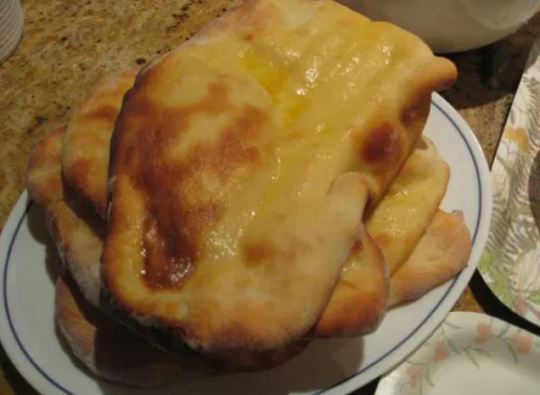
While chatting with my work colleagues who were drooling over the thought of a curry, I mentioned that I cook my naans on the barbecue. When you think about it, it’s an ideal substitute to a tandoor, you can get it very hot, close the lid and cook the naans for a few minutes each side – they puff up really well.
This is the standard naan recipe – if you want to make it more interesting you can mix fresh coriander, into the dough, or fold some cheese in, stuff it with potato, methi/fenugreek leaves or spicy mince (keema), or cook off some minced garlic and mix that through.

naan

Makes 6

Ingredients
yeast mix:
2 teaspoons dried yeast
2 teaspoons caster sugar
150ml lukewarm milk (use soy or rice milk for dairy free version)
Stir the above 3 ingredients together in a small a bowl and leave to froth and dissolve.

450g plain flour
1 teaspoon baking powder
half teaspoon salt (you can also use onion and garlic powder, but if you do this omit the salt)
150ml plain yoghurt (for dairy free version use coconut yoghurt OR approx 60mls coconut cream OR a tablespoon of lemon juice and 2 tablespoons dairy free spread, or omit the yoghurt completely)
1 egg (lightly beaten) OR egg replacer for vegan version OR omit
2 tablespoons oil (vegetable oil is ideal – don’t use a strongly flavoured oil)

Method
1. Sift the dry ingredients into a bowl – flour, baking powder, salt.
2. Add the wet ingredients – yeast mixture, egg, yoghurt, oil.
3. Mix together to form a ball of dough. Knead well.
4. Form into a ball, put a few drops of oil in a bowl and roll the dough in the oil, then wrap the bowl in cling film and leave in a warm place for an hour.
5. Knead the dough again and divide into 6 balls.
6. Roll the balls into naan shapes.
7. Cook on a very hot barbecue for a few minutes each side, or on the bars of a very hot oven. If you have a tandoor, of course, cook them in the tandoor. They should puff up nicely.

Grown Up Chocolate Bars

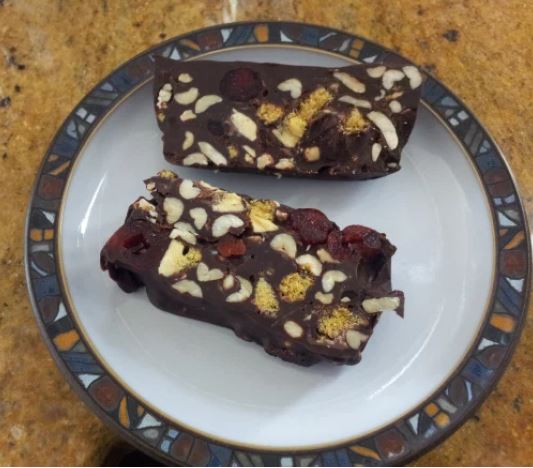
Making your own chocolate bars is so easy, and you can guarantee that your guests will love them.

gcb

The recipe here is for adult chocolate bars with dark chocolate and salty peanuts – but if you really can’t bear to go without milk chocolate, you can make them with milk, just use less butter otherwise they will be really soft. You can vary the fillings to suit your taste, I like glace cherries in mine, but you can also use crystallised ginger, caramelised nuts, slices of Cherry Ripe, M&Ms etc.

Recipe:
250g dark chocolate (try to use at least 70% cocoa) in small pieces
5 tablespoons butter (or dairy free spread)
2 tablespoons honey
1 1/2 to 2 cups of salted peanuts (the salt is essential – it brings out the flavour of the chocolate)
1 small pack of glace cherries
270g Crunchie bars, Dark Violet Crumble, or honeycomb chopped into small pieces

1. In a double boiler (or a bowl over a saucepan of water), melt the chocolate, butter and honey together. Do this gently and if you are using a bowl over water, don’t let the bowl touch the water.
2. While this is happening line a standard loaf tin with baking parchment. If you don’t have a loaf tin, you can use any container – a tupperware tub will do.
3. Put the glace cherries in a sieve and pour boiling water over them to remove the sticky coating. After a few minutes, run cold water over them to cool them down and dry them off well.
4. In another bowl combine the peanuts and the honeycomb, then add the glace cherries.
5. Once the chocolate/butter/honey has melted, take it off the heat and add the
nut/honeycomb/cherry mix. Stir well with a spatula.
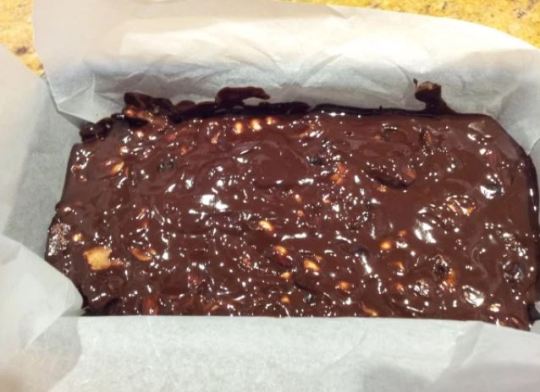
6. Transfer to your lined container and pack it down well with the spatula, then chill in the fridge for at least 4 hours.
7. When ready to serve, remove from the fridge and slice using a very sharp knife.

gcb 2

The bars make a really nice after dinner treat to serve your guests with coffee.

Gurkhas Nepalese, Kallaroo

I went to this restaurant on a whim on a Saturday night. Fancying something a bit different from the usual Japanese, Chinese or fish and chips, I scoured Urbanspoon for something local and came across this restaurant.
It is BYO and right next door to a bottleshop which is very convenient. The staff are gentle and welcoming, and the restaurant is modern with a clean, elegant ambience. The menu is unsurprisingly very similar to an Indian menu with the usual favourites like samosas, pakoras, tandoori etc.
We were given cumin poppadoms while we read the menu – it would have been nice to have some pickles to go with them. We tried to choose something that we wouldn’t find in an Indian restaurant and opted for the Gurkhas special chicken curry, served on the bone:

gh 4

The Prawns Makhani which is in a creamy tomato sauce:

gh 3

To accompany this we chose pilau rice, mushroom bhaji and keema naan:

gh 5
gh 1
gh 2

All of the dishes were really good, certainly better than most Indian restaurants in the northern suburbs. My only improvement would be to add more seasoning to the mushroom bhaji.
I would be very happy to go back to this restaurant.

Last Visit Date – November 2014

Click here to find out more

Chicken with chilli, ginger and mushrooms

ch ch gi

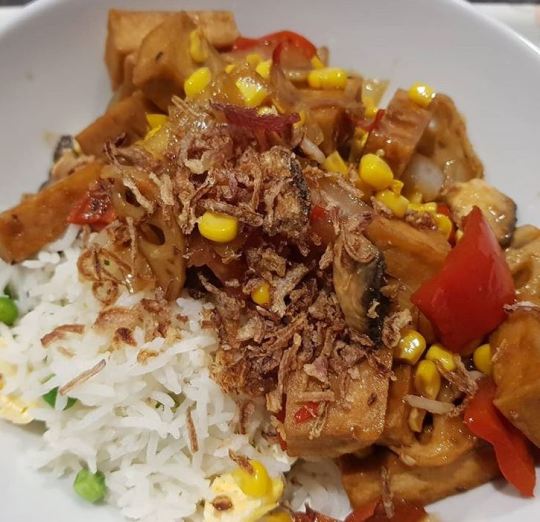
This is a Ken Hom recipe which I have adapted and every time I cook it, I get compliments from our guests. The original version does not use chilli, so you can leave it out if you want to, but I think it adds a nice dimension. The chunks of chicken in my picture are quite large but if you are feeding a lot of people, make smaller chunks so that it cooks more quickly and evenly.
If you want to serve it with special fried rice as in the picture, make sure that you have some cold cooked rice available. This is then fried in a wok in a little oil with onion, frozen peas and egg approx 4-5 minutes before serving the chicken. Fry the onion first so that it is soft, add the peas so that they thaw, then either add a pre-cooked one egg omelette that has been chopped into small pieces, or cook a raw egg in the oil and break it up with the spatula before adding the rice. Toss the rice around in the wok to distribute the onion, egg and peas, and keep going until it is heated through.
There is some prep to do at least 30 minutes before cooking – make sure you take the dried mushrooms, put them in a bowl or jug, and cover them with boiling water to give them time to reconstitute. You don’t have to use dried mushrooms, but if you do, you get a real depth of flavour and you can use the mushroom water to make the stock.

For the Chicken, ginger and mushroom you need (serves 2-4 people):

Chicken – thighs are more juicy, but you can use breast if you prefer, 100-200g per person should be plenty. This should be filleted and cut into 1 inch chunks.

Chicken marinade – this is enough for 2-4 servings:
Light soy sauce – 2 teaspoons
Shaoxing rice wine (or sherry) – 1 tablespoon
Sesame oil – 1 teaspoon
Cornflour – 2 teaspoons
Black pepper – approx half a teaspoon

Other ingredients:
Dried mushrooms – 25g – make sure these are soaked at least 30 mins ahead of cooking.
Fresh mushrooms (get a nice exotic mixture if you can – shiitake, cloud ears, brown) – 25g
Chilli – 1 small chilli of any variety – regular (or jalapeno if you are a chilli fan)
Ginger – must be fresh – 3 tablespoons peeled and cut into shreds
Garlic – 2 tablespoons peeled and chopped
Shallots or red onion – approx 4 tablespoons finely sliced – this equates to about half a red onion
Fish sauce – 1 tablespoon
Oyster sauce – 1 tablespoon
Sugar – 2 teaspoons
Chicken stock – 150mls – you can buy this ready made or make it up with the mushroom soaking water and a heaped teaspoon of good quality chicken stock powder
Groundnut oil – for cooking – probably a few tablespoons, I always guess mine
Salt and Pepper to taste
Fresh coriander and spring onion for a garnish – if you have some handy – this is optional

Method:
Things to do 30 minutes before cooking:
1. Soak the dried mushrooms in water that you have just boiled in the kettle. They should be soft after about 30 minutes – leave them longer if not. Save the soaking water to make the stock (but remove any leftover bits from it by straining through a tea strainer). Remove the stalks and discard them, slice the mushrooms and set aside.
2. If you haven’t got stock already made up, make up 150ml of chicken or vegetable stock by either a) using a stock cube or b) a heaped teaspoon of good stock powder with 150 – 200 mls of the mushroom water. Simmer in a little pan to dissolve all of the cube or powder and set aside. Bear in mind that some will evaporate so use more than 150mls of water and top it up if necessary. Alternatively you can use good quality store bought stock or bone broth in a carton – try to get the reduced salt variety.
3. Marinate the chicken in 2 teaspoons of light soy, 1 tablespoon shaoxing rice wine, 1 teaspoon sesame oil and some salt and pepper. Ken Hom says to use one and half teaspoons of salt, but I leave the salt out because the soy is quite salty. I do add about half a teaspoon of pepper though. Once the liquid marinade is mixed through, add about 2 teaspoons of cornflour and mix again – this will make the coating thicker and cling to the chicken, give it a good mix so that it isn’t lumpy.
4. Prep all the ingredients – peel and finely slice the ginger, garlic and shallots, slice the mushrooms. Slice the chilli and remove the seeds if you don’t like your food too spicy.

Cooking the chicken for the first time (this can be done in advance if you are prepping this for a busy dinner party):
1. This first cooking gives the chicken the flavour of the ginger and chilli and also makes the ginger and chilli lovely and crispy to add another nice texture to the dish.
2. Put approx 2-3 tablespoons of groundnut oil in a pan or wok and heat it until it is just smoking.
3. Add the chilli and ginger and fry for a minute until crispy.

ch ch gi 2

4. Add the chicken and fry for another 4-5 minutes until almost cooked. The time will depend on how big the chunks are – if in doubt slice a piece to see if it is almost cooked through – if it is too pink, leave longer.

ch ch gi 3
ch ch gi 4

5. Drain the chicken and reserve approx 1 tablespoon of the oil. Keep all of the crispy chilli and ginger pieces. If you are clever in the way that you do this, you shouldn’t have to clean the pan.

Putting it all together:

1. Reheat the wok or pan with the remaining tablespoon of oil (don’t worry if you lost it all, just add another tablespoon of fresh oil).
2. Add the shallots and garlic and fry for a minute to soften.
3. Add the mushrooms (dried and fresh), and continue to stir fry and soften.

ch ch gi 5

4. Add the fish sauce, oyster sauce, stock and sugar. Return the chicken to the pan.

ch ch gi 6

5. Leave to simmer for 3-5 minutes to make sure that the chicken is cooked through.

ch ch gi 7

6. Taste the sauce and add salt and pepper to adjust seasoning if necessary.
7. Serve with rice and garnish with fresh coriander and sliced spring onions.

Fried Kway Teow

ckt

If you have leftover chicken or some veggies to use up, there’s nothing easier than char kway teow for a quick supper.
You can make this dish entirely with vegetables, it will work fine like that, however if you want to add some meatlike texture, feel free to add mock meat.
Firm tofu chopped into small bite size pieces also works well.

You will need some flat rice noodles (pad thai noodles) and some beansprouts – I tend to use the dry ones and allow 75g dry weight per person, but you can use the ready softened ones if you like.

1. Boil the kettle, and soak the dry noodles in a bowl in boiling hot water – they will take about 5 minutes to soften – test them regularly and drain them in a colander when they are done to your liking. Stir a little oil through them to keep them separate.
2. Peel and chop a clove of garlic, slice a small onion, and any other veggies that you may have handy – you can slice mushrooms, tomatoes, capsicum, chilli, carrot, broccoli, cabbage etc. most veggies will work as long as you slice them small enough to cook quickly.
3. If you have some leftover roast chicken, slice that too, you can also use prawns – I think that raw tiger prawns work best, each prawn chopped into 3 or 4 pieces. I have also added sliced chinese sausage (lap cheong) to mine, but you don’t have to if you can’t find any.
4. Heat some oil in a wok – use peanut or canola oil because they will not add flavour. Fry the onion and garlic for a few minutes, then add vegetables in order of hardness – harder veggies first (like carrot and capsicum), squishier veggies last (like tomato and beansprouts).
5. If you like it spicy, add a generous dollop of chilli paste (sambal oelek) while you are cooking the veggies.
6. Add the leftover chicken or prawns. Add two to three tablespoons of ketjap manis (thick sweet soya sauce), and a squeeze of lime. Now add the drained noodles and stir fry, coating the noodles in the sauce.
7. Garnish with some crispy onions and/or crushed peanuts. Nice.

The Little Pantry, Shenton Park

In a delightful leafy location on the edge of Shenton Park sits The Little Pantry. There is seating inside and out through the back conservatory, and it’s a peaceful homely space – ideal for a leisurely brunch.
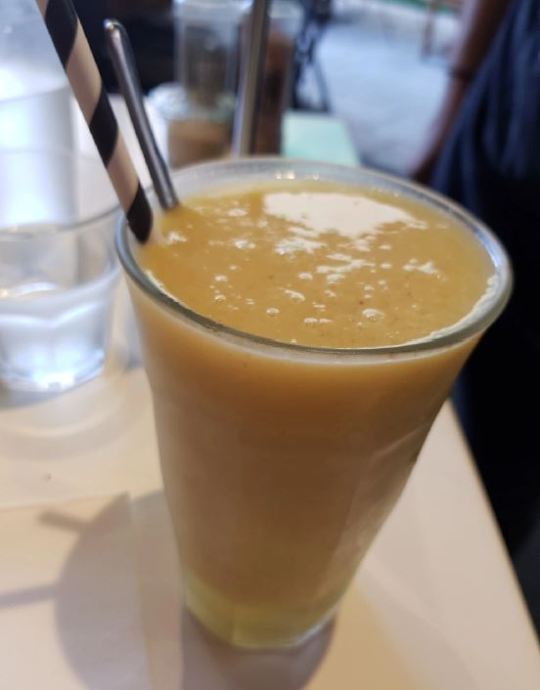
The menu contained lots of yummy options and I started with a lovely spring smoothie while I browsed the menu.

lp 1

My partner chose a soy decaf flat white, which he says was tasty, smooth and delicious.

lp 2

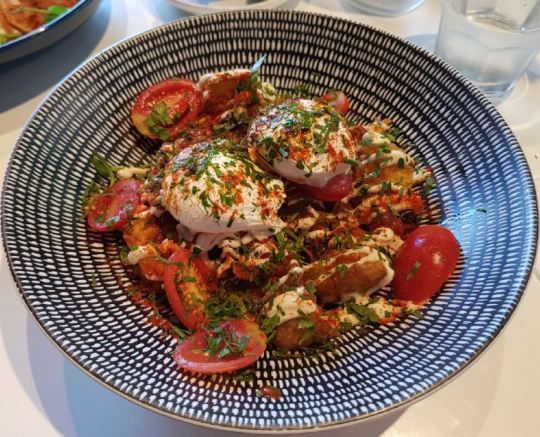
After much deliberation over fried cauliflower, coconut panacotta, truffle scrambled eggs and the like, I opted for the patatas bravas with aioli, tomato, and poached eggs. The potatoes were a delight – wonderfully crispy, the eggs nicely gooey, and the tomatoes fresh and summery. This was a great dish and one that I would have again in a heartbeat.

lp 3

My partner chose the kimchi dashi rice bowl – an artwork of kimchi with fried eggs, radish, lotus root, gochujang (hot pepper paste), sesame and herbs. The kimchi was the star of the dish with great companion flavours from the other ingredients, making for a stellar combination.

lp 4

As we left, we perused the cake cabinet, and it looked very appetising. We’re already planning a return visit to this little oasis in Shenton Park. Fabulous food and a relaxed setting – highly recommended.

Last Visit Date – November 2019

Click here to find out more

lp 5

Dhal makhani bowl:
lp 7

lp 6